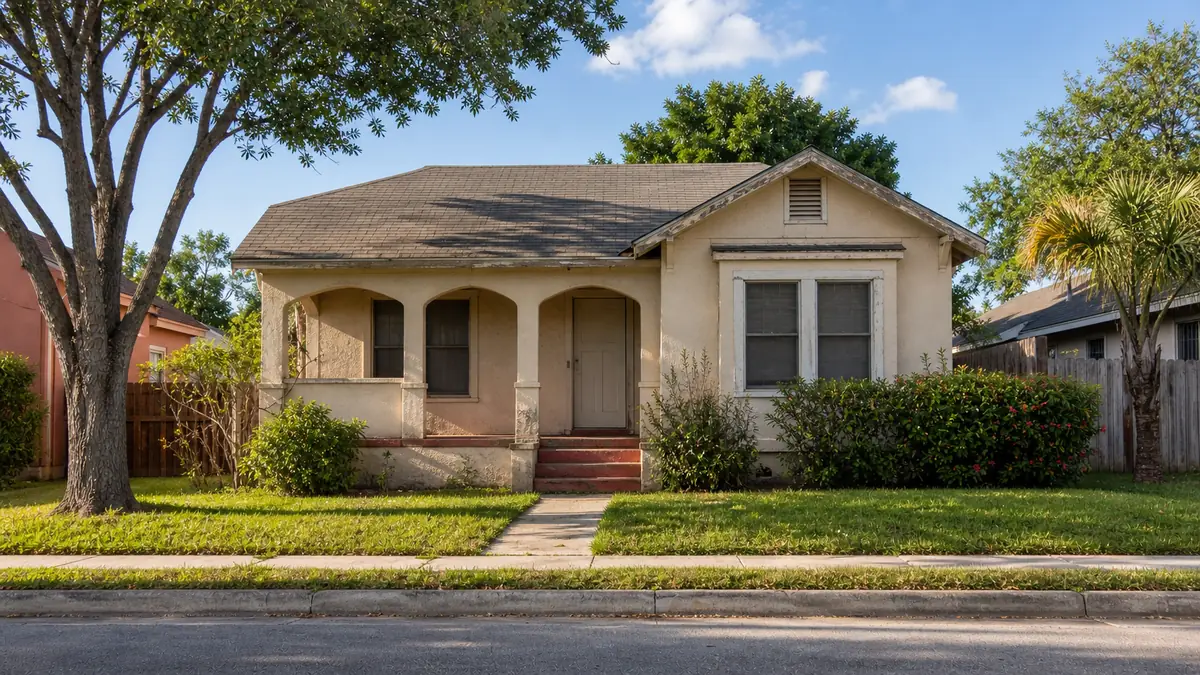
If you own a house in Brownsville that needs real work, a bad roof, a shifting foundation, old plumbing or wiring, a dying AC, water damage, and you do not have the money or the will to fix it, you can still sell. The trouble most people run into is not the condition itself. It is that a house needing repairs is hard to sell the normal way, and the reason has more to do with the buyer's bank than with you. This guide walks through why that happens, the honest math on fixing first versus selling as-is, your real options, and how a cash sale skips the part that breaks deals.
This is general information, not legal or tax advice. For your exact situation, talk to a Texas real estate attorney or a tax professional. A short call can save you a real headache later.
Why is a house that needs repairs so hard to sell the normal way?
A house that needs major work is hard to sell the traditional way because most retail buyers use a mortgage, and the bank behind that mortgage has a say in the condition. When someone buys with an FHA, VA, or conventional loan, the lender sends an appraiser, and sometimes an inspector, to look at the house before it agrees to fund the loan.
If that appraiser flags something serious, the deal can stall or die. Lenders can require certain repairs to be done before they will release the money. Think a roof that leaks, exposed wiring, no working heat, a foundation that is clearly moving, or rotted floors. Government-backed loans like FHA and VA are especially strict about health and safety items.
So picture a buyer who loves your house and signs a contract. Weeks later, the appraisal comes back demanding repairs before the loan can close. Now you are stuck. You either pay for those repairs yourself, out of a sale you have not closed yet, or the buyer walks and you start over. This is one of the most common ways these deals fall through, and it is not anyone's fault. It is just how financed buying works.
Should I fix the house first or sell it as-is?
The honest answer is that fixing first only makes sense if you have the money, the time, and a reasonable shot at getting that money back, and on a house with real problems, that is often not the case. Repairs cost cash up front. They take weeks or months. And big repairs rarely return their full cost when you sell.
There is a second trap. Once you start opening things up, you find more. A roof job uncovers rotted decking. A foundation fix reveals plumbing that cracked when the slab moved. Water damage hides mold behind the drywall. The budget grows and the timeline grows with it, on a house you are trying to get rid of.
For a lot of people, the math just does not work. You would be borrowing or draining savings to fix a house, then hoping a buyer's lender signs off, then hoping you earn it back at closing. That is a stack of gambles, not a plan. If you have deep pockets and time, fixing first and listing can net you more. If you do not, forcing it usually costs you more stress than it returns.
Why fixing it just to satisfy the bank often backfires
Spending money to pass an appraisal often backfires because you are fixing the house for someone else's loan, on someone else's timeline, with no guarantee the deal even closes. You are not upgrading the home to enjoy it. You are doing repairs a lender demanded so a stranger's mortgage can fund.
And if that buyer walks anyway, maybe their financing falls apart for an unrelated reason, you are left with a half-fixed house and a lighter bank account. You already learned this lesson the hard way if you have been through one busted deal. The deeper the repairs, the smaller the pool of financed buyers who can even get to the closing table.
What are my real options?
You have a few honest paths here. None is right for everyone, so read them against your own situation and your own budget.
- Borrow or DIY, then list. If you can fund the repairs and you have the time, fix what the bank will flag and list on the open market. This can net the most, but you carry the cost, the time, and the risk that the buyer's loan still falls through.
- List it as-is and accept a smaller buyer pool. You can put it on the market as-is, but most financed buyers will still pass on serious damage, and the ones who can close are usually investors who would have found you anyway. You may sit through weeks of showings to land an offer you could have gotten in a day. Our post on selling a house as-is walks through what that label really does and does not do.
- Sell to a cash buyer. A cash buyer does not need a bank, so there is no appraisal to fail and no lender demanding repairs. You trade some top-end price for speed and certainty.
If the damage is light and cosmetic, listing may be worth it. If it is structural, fire, flood, or a stack of failing systems at once, the cash route usually saves you the most pain.
How does selling for cash get around the repair problem?
Selling for cash gets around the repair problem because there is no bank on the buyer's side, so there is no appraisal to fail and no lender requiring repairs before closing. The whole appraisal trap disappears. A cash buyer prices the house as it sits today, repairs and all, and closes on it.
That is also why these deals do not collapse at the last minute the way financed ones do. There is no loan to fall apart. If you are dealing with serious damage, a house that needs heavy repair or has taken real damage is exactly the kind of property a cash buyer is built to take on.
Here is how we handle it at Easy Offers Cash:
- You tell us the address and what the house needs. You can call or use the form. Photos help, but they are not required.
- We look at recent sales near you and the condition you describe, then send a written cash offer within 24 hours. We show you the comparable sales we used, so you see how we got to the number.
- If the offer works for you, you pick the closing date. A licensed title company handles the paperwork and the money.
- You make no repairs and do no cleaning. There is no appraisal contingency to fail. You pay no fees and no commissions, and we cover the standard closing costs.
If the number does not work for you, you walk away. No fee, no obligation, no pressure. We mean that.
The honest tradeoff: a cash sale is faster and certain, but it is not top-of-market. We buy the house with its problems built into the price, so you will not see the number a fully renovated home would fetch after months on the market. What you get instead is speed, no repair bills, and a deal that does not hinge on a bank. For the full side-by-side, our guide on how to sell your house fast lays out every option.
I am Lorenzo, and I have been buying houses since 2022, right here in Brownsville. I have stood in houses with buckled floors, water-stained ceilings, and AC units that gave up years ago. The condition does not embarrass me, and it should not embarrass you. Houses wear out, money gets tight, and life does not wait for a remodel. We buy throughout Brownsville and the rest of Cameron County, in any condition.
If you want a straight answer on what your Brownsville house is worth in cash, exactly as it sits, we can have a written offer to you within 24 hours. No fee. No obligation. You stay in control the whole way.