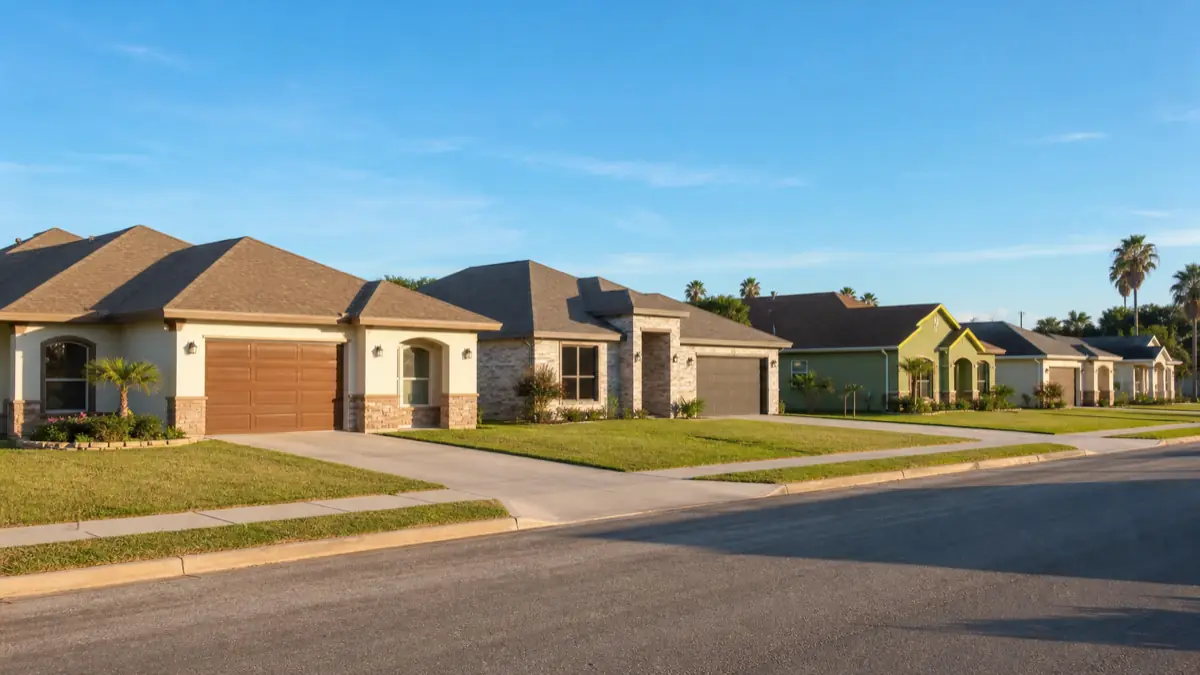
When people ask me what their house is worth, they usually mean one thing: what will I actually walk away with? That is a fair question, and the honest answer is that the sale price and the take-home number are two different things. Selling the traditional way comes with costs that add up, and most of them come out of your check at closing. This guide walks through what it really costs to sell a house in Cameron County, in plain numbers, so you can see where the money goes.
This is general information, not legal or tax advice. Every fee here is negotiable and varies by sale. For the exact numbers on your house, ask a local title company or a real estate agent here in the Valley. Many will walk you through a net sheet at no cost.
How much does it cost to sell a house in Texas?
Selling a house in Texas usually costs the seller around 7 to 10 percent of the sale price once you total commission, closing costs, and the smaller line items. That is before any repairs or holding costs. On a mid-priced Cameron County home, that is real money out of your pocket, so it helps to see each piece on its own.
None of these numbers are fixed. Commission rates are negotiable, who pays which fee can shift, and condition changes the repair side a lot. Treat the figures below as general ranges, then confirm the exact amounts with a local title company.
What does the agent commission cost?
Agent commission is usually the single biggest cost of a traditional sale. It commonly runs around 5 to 6 percent of the sale price in total, and that amount is often split between the agent who lists your house and the agent who brings the buyer.
On a Valley home, do the math on your own price and the number gets your attention fast. The rate is negotiable, and how commission is handled has been changing across the country, so ask any agent exactly what they charge and what that fee covers. A good agent will answer it straight.
What seller-paid closing costs should you expect in Texas?
In much of Texas, the seller customarily pays for the owner's title insurance policy, which protects the buyer's ownership against title problems. That is often the largest closing cost after commission. The split can be negotiated, but in this part of the state the seller usually carries it.
On top of title insurance, plan for a handful of smaller items that show up on most closing statements:
- Escrow or settlement fees charged by the title company that handles the closing.
- Document preparation and recording fees to make the sale official with the county.
- Any HOA transfer fee, if your neighborhood has a homeowners association.
- Prorated property taxes owed through your closing date, since Texas taxes are paid in arrears.
Who pays closing costs in Texas is partly custom and partly negotiation. The buyer covers their own loan and lender fees. The seller typically covers the owner's title policy and the items above. None of it is carved in stone, so a local title company can show you a line-by-line estimate.
What about repairs, prep, and holding costs?
These are the costs people forget until they are deep in the process. A traditional sale almost always means spending money to get the house sold, plus time while it sits.
After the inspection and option period, buyers often ask for repairs or a credit. A roof issue, an old AC unit, or a foundation note can turn into thousands of dollars or a lower price. Before that comes pre-listing prep: cleaning, minor repairs, maybe staging, and good photos so the house shows well online.
Then there are holding costs that run the whole time the house is listed and under contract. You keep paying the mortgage, property taxes, insurance, utilities, and upkeep, often for a couple of months. If the first buyer's financing falls through, that clock starts over.
A simple example of how the costs stack up
Here is a hypothetical example, just to show how the pieces add together. It is not a real Easy Offers Cash deal and not a quote. Say a house would list for around two hundred thousand dollars.
- Agent commission at about 5.5 percent: roughly eleven thousand dollars.
- Seller-paid closing costs, including the owner's title policy and the smaller fees: often somewhere in the low thousands.
- Repairs and a buyer credit after the inspection: another few thousand, depending on condition.
- Prep before listing plus a couple of months of holding costs: a few thousand more.
Add those up and you can easily reach 8 to 10 percent of the sale price, sometimes more. That is real money off the top before you ever see your check. Your numbers will differ, which is why a net sheet from a local title company is worth getting.
How does a cash sale compare?
A cash sale strips most of those costs out. There is no agent commission, because you sell directly to the buyer. There are no repairs and no prep, because you sell the house exactly as it sits today. There are no buyer concessions after an inspection, and no months of holding costs, because the timeline is short and certain.
At Easy Offers Cash, we also cover the standard closing costs. So the number we put in writing is close to what you actually walk away with. There is no long list of deductions waiting at the closing table. To see how that works on your own address, you can get a cash offer on your Cameron County house with no fee or obligation.
A cash offer is usually below full retail price. That is the honest tradeoff. What you buy with that difference is speed, certainty, and a take-home number you can count on, without writing checks for commission, repairs, and carrying costs.
How Easy Offers Cash works
I have been buying houses since 2022, and the process is built to be simple. You can see exactly how the cash offer works on our How It Works page, but here is the short version.
- You send us the address and a little about the house. You can call or use the form.
- We look at the comparable sales near you and the condition you describe, and we send a written cash offer within 24 hours. We show you the comps we used, so you see how we got to the number.
- If the offer works for you, you pick the closing date. A licensed title company handles the paperwork and the money.
- You pay no fees and no commissions. We cover the standard closing costs. No repairs, no cleaning, no showings.
If the number does not work for you, you walk away. No fee, no obligation, no pressure. We mean that. If you want to weigh both paths side by side first, our guide on how to sell your house fast lays out the options.
So which one nets more?
The honest answer depends on your house and your situation. If your home is clean and move-in ready, and you can carry the commission, the repairs, and a couple of months of holding costs, a traditional listing can net more in the end. I will not pretend otherwise.
But when you total the friction, the math is closer than it looks on the sticker price. A cash sale wins on certainty and simplicity. You know your number, you know your date, and you keep nearly all of what you are offered. For a lot of Cameron County sellers, that is worth more than chasing the last few percent.
I am Lorenzo, and I started Easy Offers Cash right here in Cameron County. Selling a house is stressful enough without surprise costs eating your check at the end. Whichever way you go, you deserve to know the real numbers up front.
If you want a straight answer on what your house is worth in cash, with no deductions hiding at closing, we can have a written offer to you within 24 hours. No fee. No obligation. You stay in control.