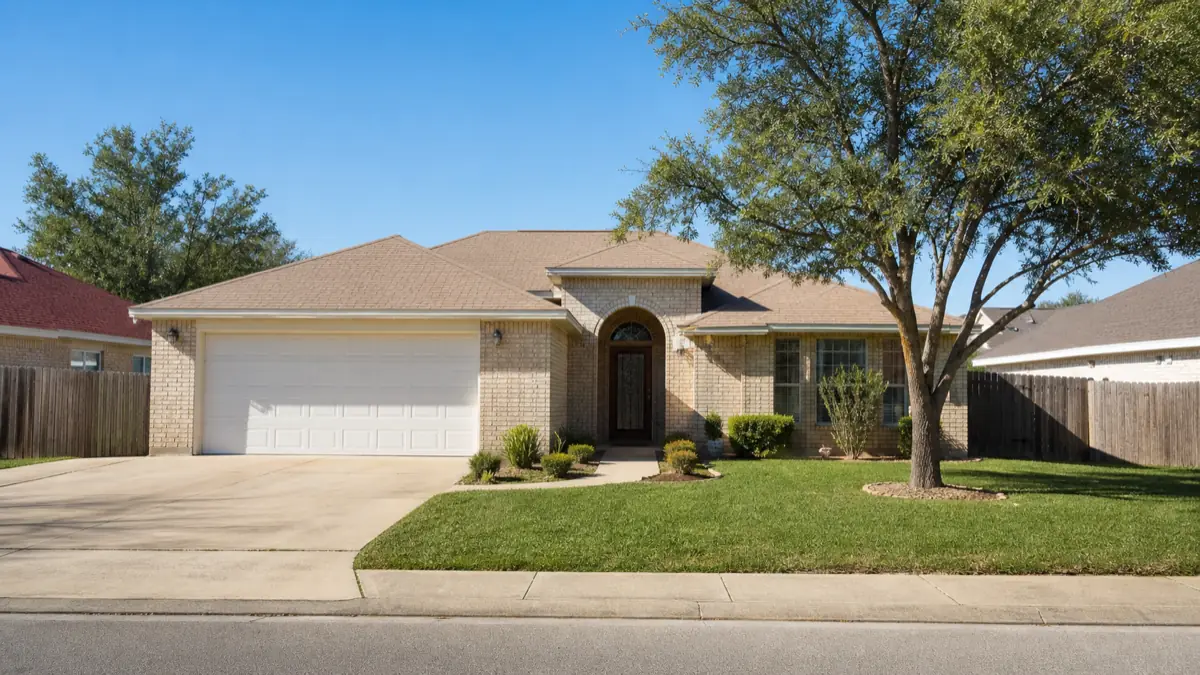
If you are weighing a cash offer against listing your Brownsville house with an agent, the honest answer is that neither one wins every time. A listing usually fetches a higher price on paper. A cash offer is lower on paper but takes out the costs, the waiting, and the risk. The right call depends on your house and your situation, not on a slogan. This guide walks through the real math both ways so you can decide for yourself.
Which one actually puts more money in your pocket?
It depends on the house, but the number that matters is what you keep, not the price on the sign. An agent listing usually gets a higher gross price. A cash offer is a lower gross price that already has the costs stripped out. So the real comparison is your net both ways, after everything comes out.
A lot of people stop at the headline price and assume the higher one means more money. Sometimes it does. But a sale has costs and time attached, and those come straight out of your side. Once you total them up, the gap between the two routes is often smaller than it looks.
What comes out of the agent-sale price
On a traditional listing, several costs come out of the sale price before you see a dime. None of them show up on the list price, which is why the final check is always smaller than the headline.
Here is what usually comes out:
- Agent commission. This is commonly around 5 to 6 percent of the sale price total, split between the two agents. It is negotiable, but it is real money off the top.
- Repairs and prep before listing. Paint, flooring, a roof patch, a working AC, landscaping, and cleaning. Buyers in Brownsville expect a home that shows well, and getting it there costs money up front.
- Buyer concessions after the inspection. Once a buyer has the house under contract, the inspection often turns up items. Many buyers come back and ask you to fix them or knock money off the price.
- Holding costs while it sits. Every month the house is listed and then closing, you are still paying the mortgage, the property taxes, the insurance, the utilities, and the upkeep. A few months of that adds up.
The list price is the starting line. Your net is what is left after all of that.
What is the risk of a financed buyer falling through?
The biggest hidden risk in a traditional sale is that a financed buyer can fall through, sometimes weeks into the deal. Most retail buyers need a mortgage, and that loan has to clear an appraisal and underwriting before it funds.
If the home appraises below the agreed price, the lender may not loan the full amount, and the deal can stall or die. If the buyer's finances change during underwriting, the loan can fall apart even after you thought you were close. Then the house goes back on the market and you start over, weeks lost and more holding costs spent.
That is not a reason to avoid listing. It is just a real cost of the traditional path that belongs in the math, because your time and certainty have value too.
What the cash route takes out
A cash sale trades a lower gross price for the removal of nearly all of those costs and risks. You are not getting top of market. In exchange, the friction goes away.
On a cash sale with Easy Offers Cash:
- No agent commission, because there is no agent in the middle.
- No repairs and no prep. You sell the house exactly as it sits today.
- No holding costs dragging on, because the close is measured in days, not months.
- No buyer concessions after an inspection chipping away at your number.
- We cover the standard closing costs.
- You pick the closing date that works for you.
- It is certain. There is no bank on the buyer's side, so there is nothing to fall through at the closing table.
So a cash offer looks lower at first glance, but much of that gap is cost and risk you would have carried on the other path anyway.
A hypothetical example, so you can see the math
The clearest way to show this is with round, made-up numbers. To be plain about it: the figures below are an illustration to show how the math works. They are not a real Easy Offers Cash deal and not a promise of any specific price for your home.
Say a house might list for around 250,000 dollars with an agent. Here is roughly how the agent side could shake out:
- List price: about 250,000 dollars.
- Agent commission at around 6 percent: about 15,000 dollars off the top.
- Repairs and prep before listing: say about 8,000 dollars.
- Buyer concessions after the inspection: say about 5,000 dollars.
- Holding costs over a few months of listing and closing: say about 6,000 dollars.
In that made-up case, the seller nets roughly 216,000 dollars, and only after a few months and the risk of the buyer backing out.
Now say a cash offer on that same house comes in lower on paper, around 215,000 dollars. There is no commission, no repairs, no concessions, and almost no holding cost, and we cover standard closing costs. The seller keeps close to the full 215,000 dollars, in a matter of days, with the date of their choosing.
In this illustration the two checks land close together, but the cash route gets there faster and with certainty. Your real numbers will be different. The point is to total everything, not just the two headline prices.
When each route is the better call
List with an agent when the home is move-in ready, you have a couple of months, and your main goal is top dollar. If the house shows well and you can afford to wait, the open market may hand you the highest gross price, and that can be worth the time and cost.
Take the cash route when speed or certainty matters more than squeezing out the last few thousand. Cash tends to be the better call when:
- You need to be done on a deadline, like a foreclosure date, a job move, or a divorce settlement.
- The home needs work you cannot or do not want to fund before selling.
- You cannot float months of repairs and holding costs while a listing plays out.
- You simply want a firm number and a firm date, with no risk of the deal collapsing.
Neither answer is wrong. They solve different problems. The trick is being honest about which problem you actually have.
How we help you run this math yourself
You do not have to take our word for any of this, because we show you the comparable sales behind your number. When we send a written cash offer, it comes with the recent nearby sales we used to get there, so you can see exactly how the number was built.
That puts you in a position to compare cleanly. Take our offer, look up what agents in Brownsville charge and what similar homes are netting, and weigh both paths against your deadline. If you want to go deeper on the timeline side, our guide on how to sell your house fast lays out what speeds a sale up and what slows it down.
I am Lorenzo, and I have been buying houses since 2022. I am not going to tell you cash always wins, because it does not. If your house is in great shape and you have time to wait, listing may put more in your pocket, and I will tell you that straight. What we are good at is the other situation: when you need speed, certainty, or an as-is sale, and you want to know your real number today.
If you want that number for your Brownsville house, we can have a written offer to you within 24 hours, with the comparable sales attached, and no fee or obligation. Look it over, run the math against a listing, and decide from there.